A pawn shop is one of the few storefronts left in America where you can still walk in, hand a stranger something valuable, and walk out with cash in minutes. The mechanics have not changed much in a thousand years. Neither, in a handful of remarkable cases, has the address.


Pawnbroking is one of the world's oldest professions. The three golden balls that hang outside many shops descend from the coat of arms of the House of Medici, the Italian banking family whose Lombard branch lent money against collateral in the Middle Ages. Edward III of England is said to have pawned the crown jewels in 1339 to finance his campaigns in France. Queen Isabella of Castile is said to have pawned hers, by tradition, to fund Christopher Columbus's voyage in 1492. The word Lombard itself became a synonym for pawnbroker across Europe.
In the United States, pawnshops trace their commercial history to the late 19th century, when waves of immigrants – Jewish, Italian, Irish, German – opened storefront lenders in the dense neighborhoods of New York, Newark, Detroit, and Chicago. Most of those shops are gone. A surprising number are not.
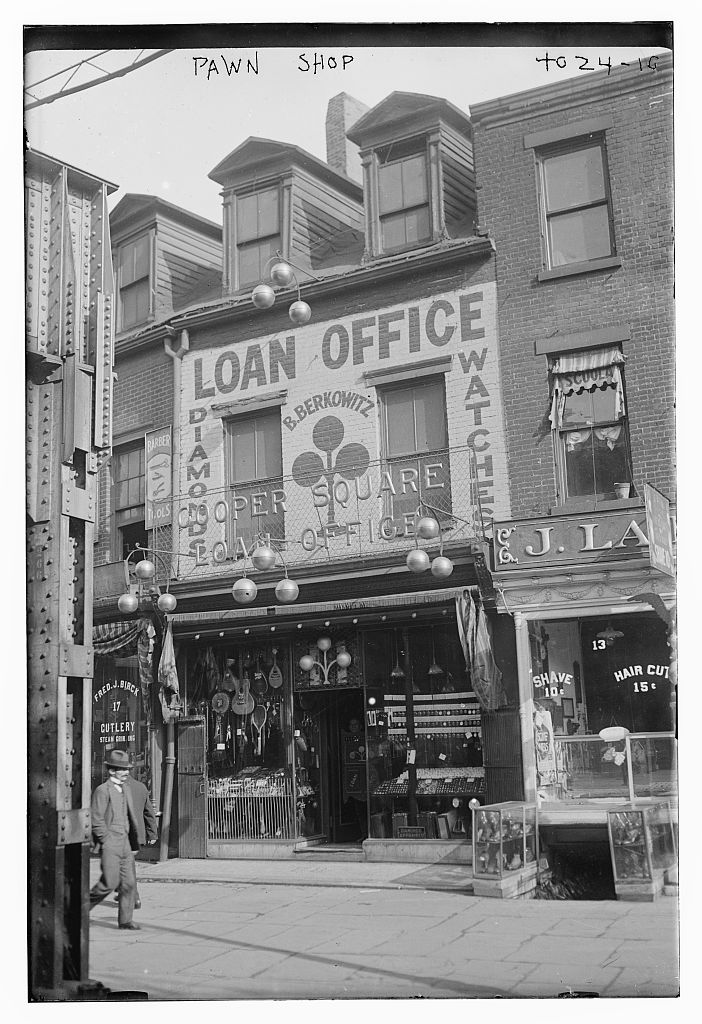

This is an essay about twelve of them – the oldest still-operating pawn shops in our directory. Some have been on the same street for over 130 years. All of them have outlasted multiple bank failures, two world wars, a Great Depression, the collapse of urban manufacturing, and the rise of an internet that was supposed to make their entire business obsolete. They are still here. Some are even thriving.
For the complete list with current addresses, phone numbers, and ratings, see our directory of the oldest pawn shops in America. What follows is the story behind the names.
| Year | Shop | City |
|---|---|---|
| 1890 | William S. Rich & Son | Newark, NJ |
| 1895 | H. Schoenberg Pawnbrokers & Jewelers | Jersey City, NJ |
| 1918 | Zeidman’s Jewelry and Loan | Detroit, MI |
| 1938 | Beverly Loan Company | Beverly Hills, CA |
| 1940 | Sol’s Jewelry & Pawn | Kansas City, KS |
| 1941 | Bonded Loan Office | Columbia, SC |
| 1941 | Larsen’s Jewelry & Half Interest Pawn | Mobridge, SD |
| 1946 | B & B Loan Company | Fort Wayne, IN |
| 1950 | Paradise Pawnbrokers | Bronx, NY |
| 1950 | Goldman’s Pawn Shop | Evansville, IN |
| 1955 | Neighborhood Pawn & Resale | Milwaukee, WI |
| 1960 | Chicago Pawners & Jewelers | Chicago, IL |
The 19th-century survivors
William S. Rich & Son – Newark, New Jersey (established 1890)
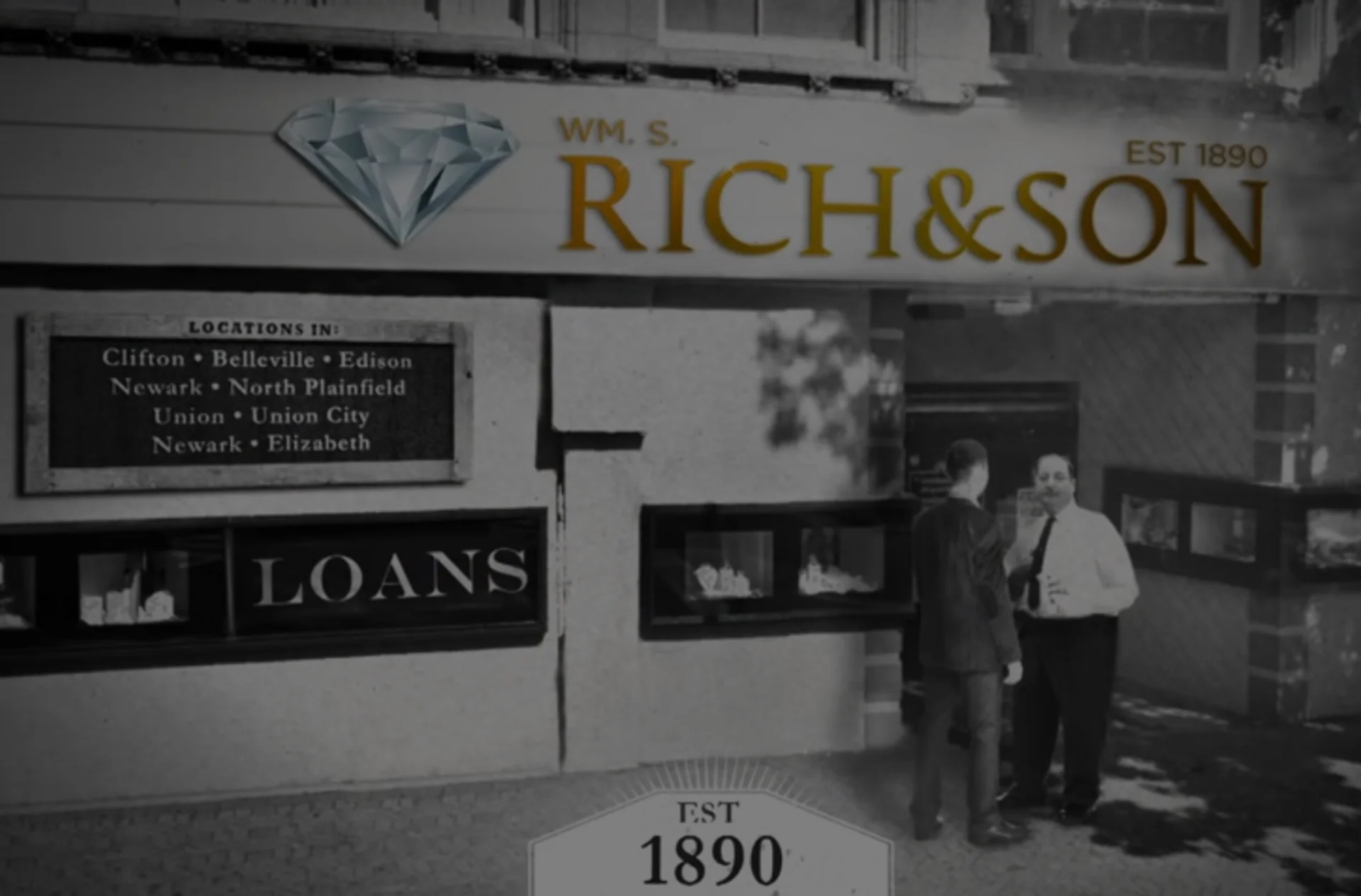
William S. Rich opened his loan office on Newark's Broad Street the same year the Sherman Antitrust Act became law, and the year Idaho became a state. The shop has been there ever since – through Prohibition, two world wars, Newark's industrial peak, the 1967 riots, and the long urban contraction that followed. Five generations of the Rich family have run it. Today it operates out of an upgraded storefront at 857 Broad Street and bills itself as New Jersey's largest pawnbroker and jeweler. It is one of the very few American pawn shops now using AI-powered authentication tools (Entrupy) to vet luxury handbags and designer pieces. The technology is new. The business model is 135 years old.
H. Schoenberg Pawnbrokers & Jewelers – Jersey City, New Jersey (established 1895)

Five years after Rich opened in Newark, Herman Schoenberg opened a pawn shop and jewelry store five miles east in Jersey City's McGinley Square neighborhood. H. Schoenberg Pawnbrokers & Jewelers is still owned and operated by the same family, more than a century later. The shop specializes in jewelry, gold, and musical instruments, and offers four-month low-interest pawn loans – a notably long redemption window in an industry where 30-to-90-day loans are standard. McGinley Square has changed names, populations, and skylines many times since 1895. The pawn shop has not moved.
The early 20th century: Detroit and the rise of industrial pawnbroking
Zeidman's Jewelry and Loan – Detroit, Michigan (established 1918)
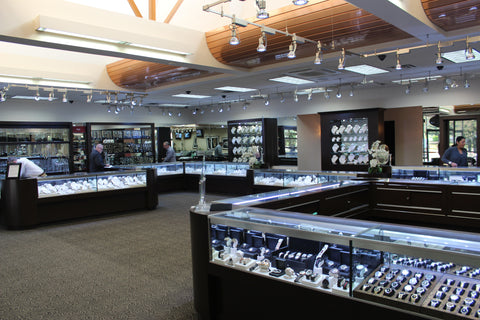
By the time Sam Zeidman opened his pawn shop on Gratiot Avenue in 1918, Detroit was on its way to becoming the manufacturing capital of the world. Ford's Model T was rolling off the line at Highland Park. The city's population would more than double in the next twenty years. Zeidman's grew up alongside that boom – and stayed through the bust. Today, four generations into the family business, Zeidman's specializes in jewelry, diamonds, coins, luxury watches, and antiques. It is one of the few pawn shops in America with a serious in-house gemology operation. It is also one of the few that has been continuously owned by the same family since the Wilson administration.
Eleven of the twelve shops are still owned by the founding family. That is not a coincidence – it is the precondition for surviving cycles that have killed almost every other independent retail format in America.
The pre-war and wartime founders
Beverly Loan Company – Beverly Hills, California (established 1938)
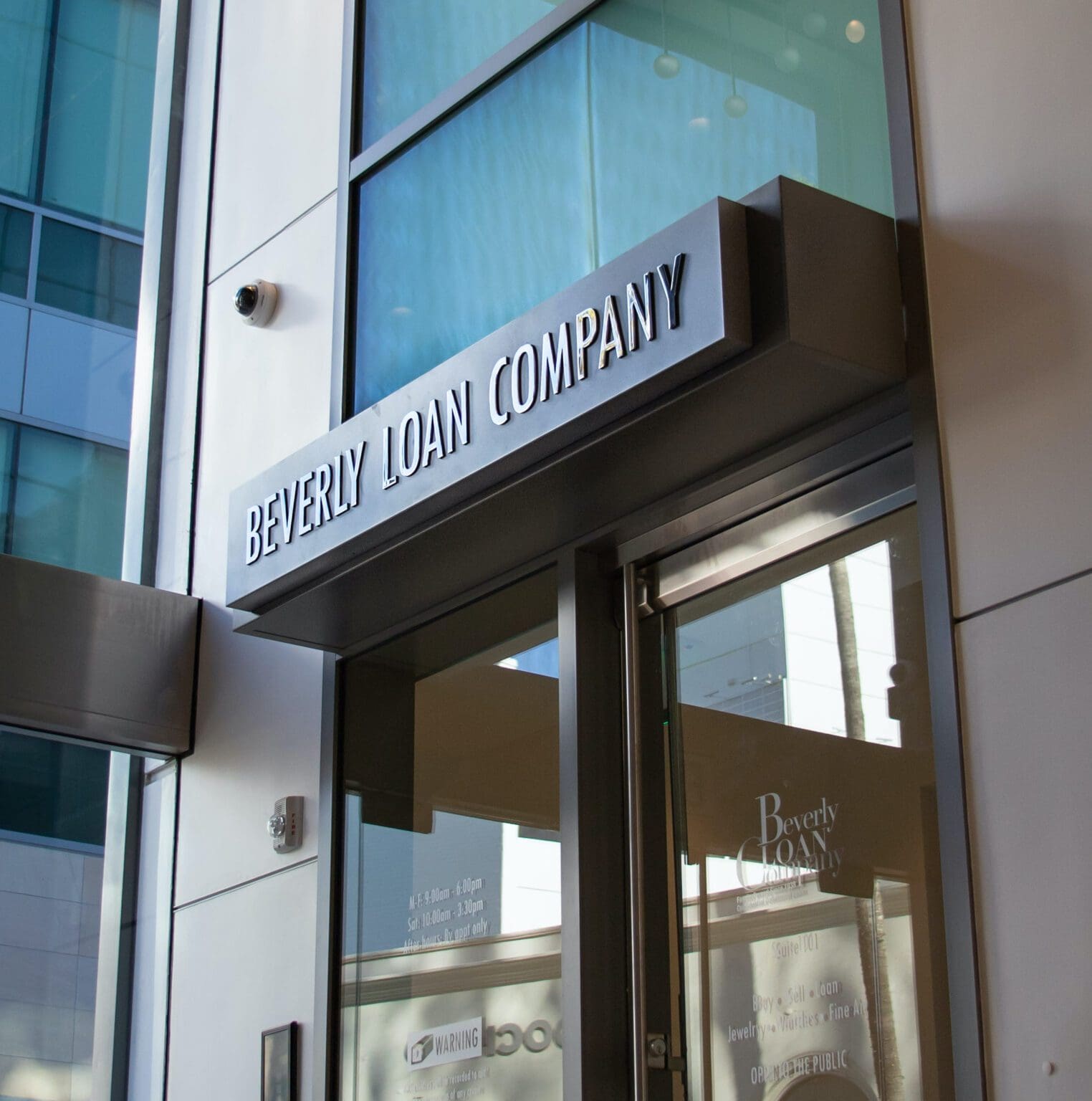
Not every old pawn shop is a working-class storefront. Beverly Loan Company opened in 1938 inside a Beverly Hills office building and has been there ever since – currently on an upper floor of the building at the intersection of Wilshire Boulevard and Santa Monica Boulevard, a few blocks from Rodeo Drive. Beverly Loan is the upscale exception that proves the rule. Its clients are Hollywood producers, tech founders, and high-net-worth families. Its collateral inventory at any moment runs to Rolex Daytonas, Patek Philippe perpetual calendars, fine art, and signed first editions. The shop has been featured in countless magazine profiles for the same reason: it is one of the few places on earth where someone can quietly borrow seven figures against a watch in a single afternoon, with no credit check and no bank.
Sol's Jewelry & Pawn – Kansas City, Kansas (established 1940)
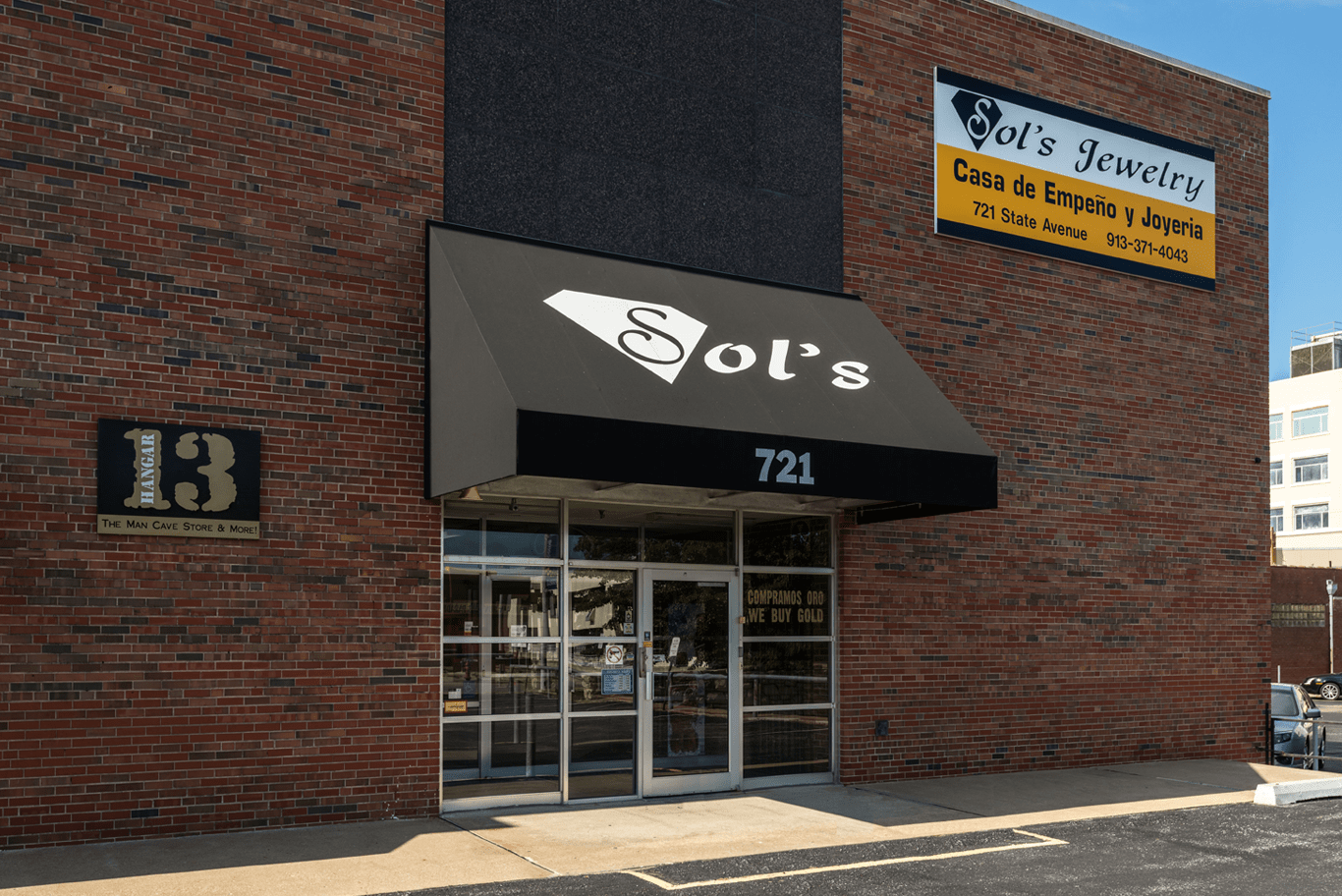
Sol Koch opened Sol's Jewelry & Pawn on State Avenue in 1940. The shop has now been part of the State Avenue commercial strip for more than eight decades, specializing in fine jewelry, diamonds, gold, and coins. Sol's is the kind of place where regular customers have been doing business with the shop for two and three generations – a pattern that turns out to be remarkably common among century-old pawn shops. The trust that takes a generation to build is what allows the business to keep working.
Bonded Loan Office – Columbia, South Carolina (established 1941)
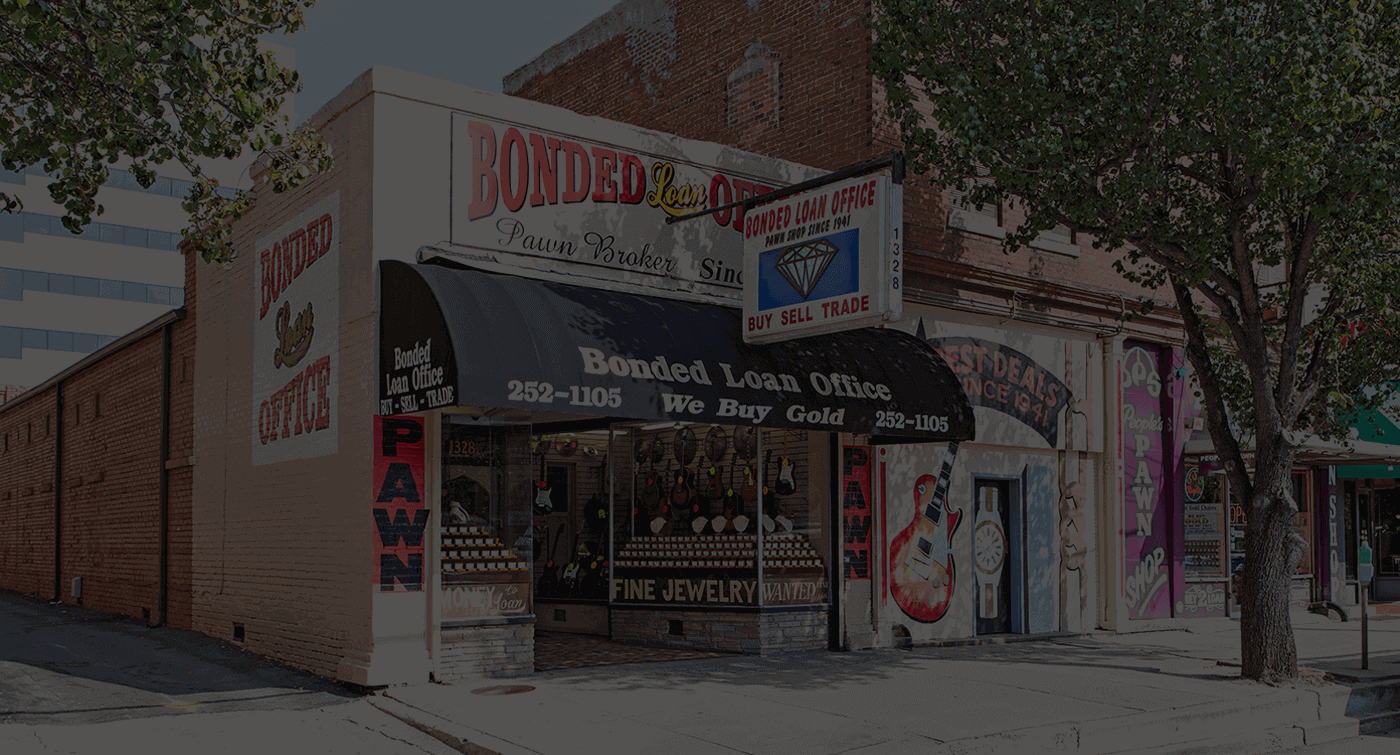
South Carolina's oldest active pawnbroker, Bonded Loan Office, has anchored downtown Columbia's Assembly Street since 1941. It is multi-generational and family-owned. Unusually for a pawn shop, it has two on-site graduate gemologists – the kind of credentials more often associated with a high-end jeweler than a loan office. The shop's selection of estate jewelry has become a destination in itself for Columbia residents.
Larsen's Jewelry & Half Interest Pawn – Mobridge, South Dakota (established 1941)
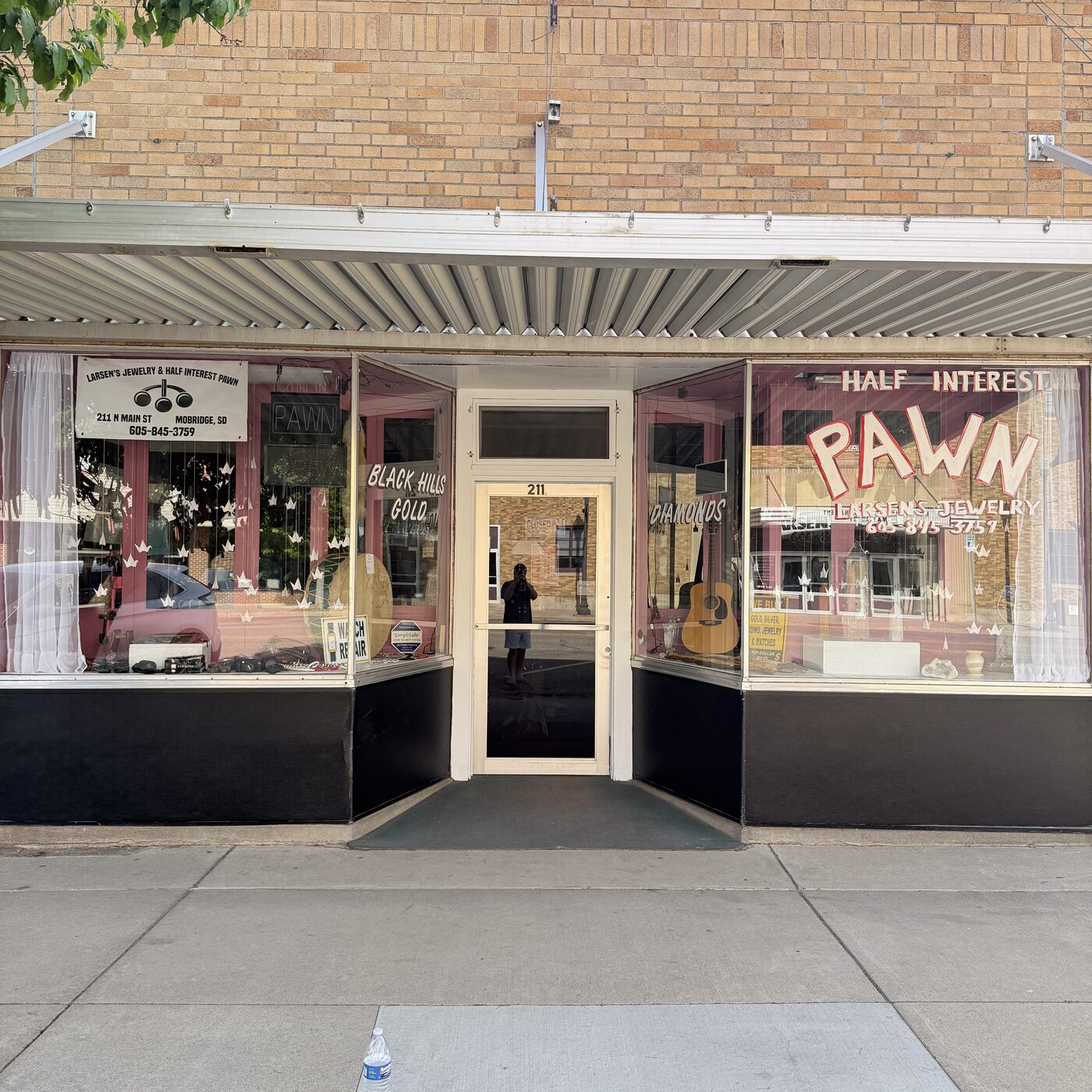
The same year Bonded Loan opened in Columbia, Larsen's Jewelry opened roughly 1,200 miles to the northwest, on Main Street in the small town of Mobridge, South Dakota – population then under 4,000, and not much larger today. Larsen's Jewelry & Half Interest Pawn has been on the same Main Street ever since. The shop carries what the family says is one of the region's best selections of authentic Black Hills Gold – the tri-color (yellow, rose, and green) jewelry made only in the Black Hills of South Dakota under federally protected geographic designation. It also serves the area's Native American beadwork tradition, stocking supplies for the craftspeople of the nearby Standing Rock and Cheyenne River reservations. The pawn side of the business handles jewelry, bullion, coins, electronics, tools, and musical instruments. It is, in many ways, exactly the kind of pawn shop that built the rural Midwest – a single Main Street storefront that has done a little bit of everything for everyone in town for 85 years.
B & B Loan Company – Fort Wayne, Indiana (established 1946)
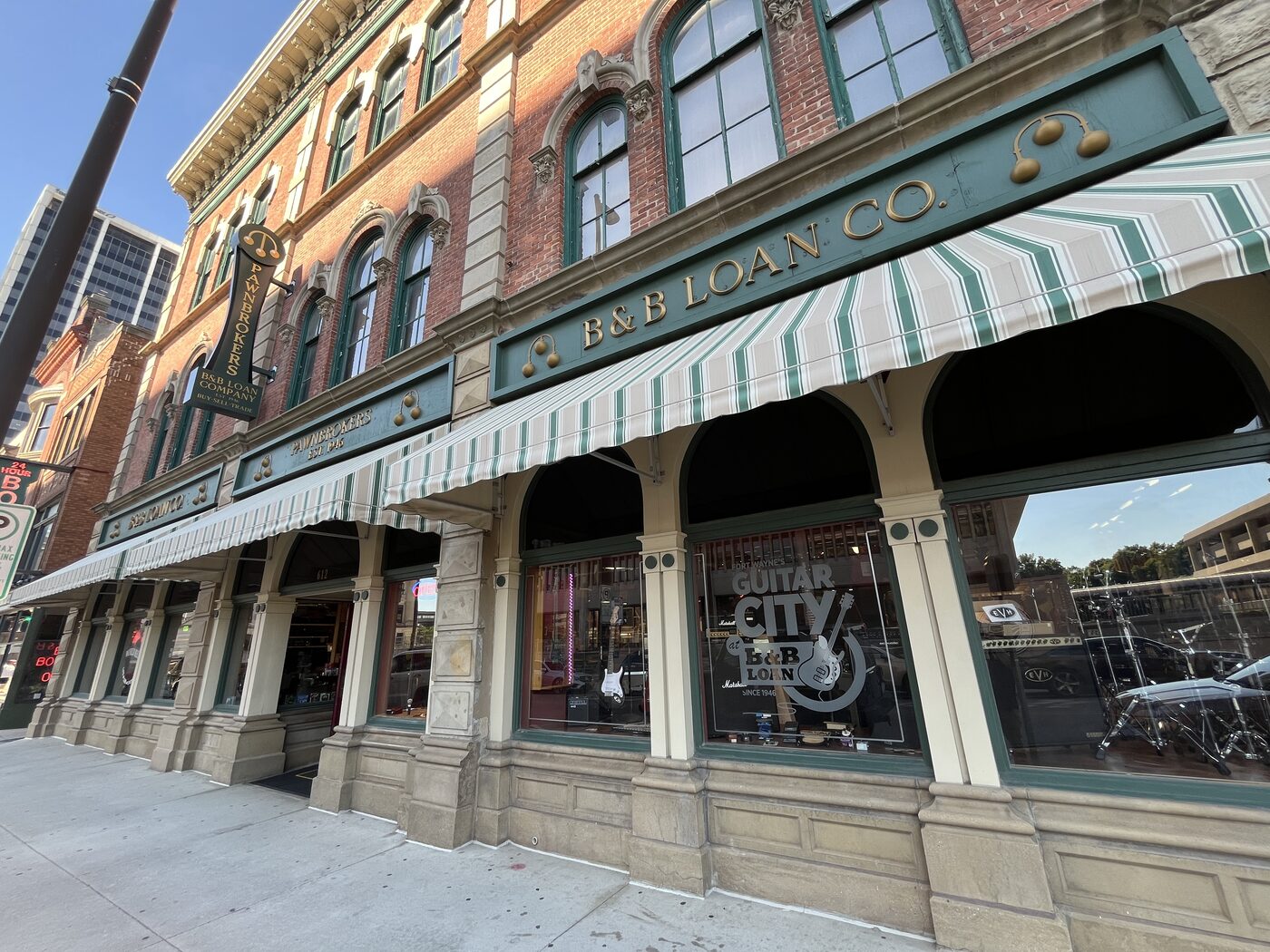
B & B Loan Company opened on South Calhoun Street in Fort Wayne in 1946, the first full year after the end of World War II. Indiana, like much of the industrial Midwest, was absorbing returning soldiers, rebuilding consumer industries, and rapidly suburbanizing. B & B grew up with the postwar boom in Allen County and has remained locally owned through every decade since. Its inventory mix – jewelry, electronics, tools, instruments, coins – is the closest thing the industry has to a standard generalist pawn shop. The longevity is anything but standard.
The post-war neighborhood institutions
Paradise Pawnbrokers – Bronx, New York (established 1950)
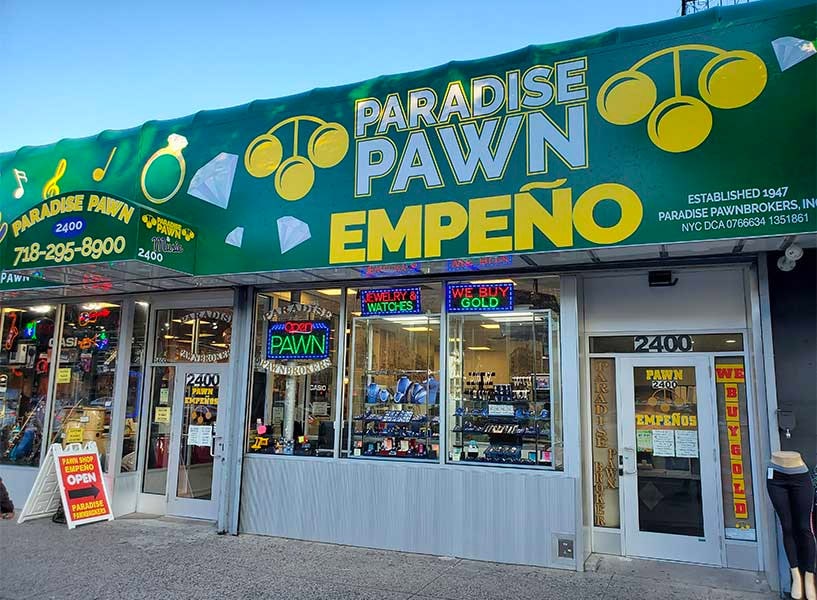
The 1950s built much of the modern Bronx – and they built Paradise Pawnbrokers, on the Grand Concourse, a block from Yankee Stadium. The neighborhood has cycled through booms and busts and demographic transformations many times in the 75 years since. Paradise has remained a family-owned institution the whole way, specializing in jewelry, electronics, musical instruments, and coins, and known to local customers for honest appraisals and a loyal clientele. The Grand Concourse storefront is now in its third generation of family ownership.
Goldman's Pawn Shop – Evansville, Indiana (established 1950)

Five hundred miles west, in the Tri-State corner where Indiana meets Kentucky and Illinois, Goldman's Pawn Shop opened in 1950 in downtown Evansville. Goldman's is one of the longer-running federally licensed (FFL) firearms-handling pawn shops in the Midwest, alongside the more typical pawn categories of jewelry, electronics, tools, and instruments. It has been a downtown Evansville institution for three quarters of a century.
Neighborhood Pawn & Resale – Milwaukee, Wisconsin (established 1955)
Neighborhood Pawn & Resale has one of the more unusual origin stories on this list. The business started in the 1950s as a wholesale fur and leather operation – Milwaukee was then a major Midwest hub for the fur trade – and grew into one of the region's largest fur and leather distributors. Along the way, it added neighborhood pawn services. Today it is one of the few pawn shops in America where a customer might walk in to pawn a power drill and walk out past a working inventory of mink and shearling coats. The combination is a reminder that pawn shops, at their best, are shaped by the local economy they serve.
Chicago Pawners & Jewelers – Chicago, Illinois (established 1960)
Sixty-five years on West Madison Street is not unusual in Chicago, but it is increasingly rare in pawn. Chicago Pawners & Jewelers opened in 1960 and has grown into one of the city's largest and most decorated pawn shops, with G.I.A.-certified diamonds, an in-house master jeweler for repairs, and a national reputation for high cash payouts on gold and jewelry. It is the youngest shop on this list – and at 65 years old, still operates as a multi-generational family business.
What 100-year-old pawn shops have in common
The shops above span six time zones, twelve cities, and an unusually wide range of business models – from a discreet Beverly Hills office that lends six figures against a wristwatch, to a small-town South Dakota Main Street jeweler that also sells Native American beadwork supplies. They look nothing alike. They serve almost no overlapping customers. But the pattern beneath them is striking.
Almost every shop on this list is still owned by the founding family. Pawnbroking is, even in 2026, a family business. Eleven of the twelve shops are family-owned and multi-generational. That is not a coincidence – it is, in many ways, the precondition for surviving the cycles that have killed almost every other independent retail format in America. A family-owned pawn shop can ride out a 10-year stretch of declining gold prices, or a neighborhood crime wave, or a recession, in ways that a venture-backed competitor cannot.
The shops have evolved their specialties along with the local economy. Newark and Beverly Hills both have luxury watches and designer handbags, but for very different reasons. Mobridge has Black Hills Gold and beadwork supplies. Milwaukee has fur. Detroit has high-end jewelry and antiques because Detroit's mid-century manufacturing wealth left a lot of family jewelry behind. The pawn shops that survive are the ones that read the neighborhood right.
They have all leaned into trust over time. Decades of repeat customers are what keep a pawn shop alive. The shops on this list almost all have above-average ratings and reviews. The bad actors don't last a century. Selection bias is doing real work here.
They have adopted modern tools without changing the core business. AI-powered authentication, certified gemology, FFL firearms compliance, online inventory – many of these shops use modern infrastructure. But the fundamental transaction (collateral in, cash out, ticket on the wall) is unchanged from 1890.
Key takeaways
- Family ownership is the survival mechanism. Eleven of twelve are still in the founding family.
- Specialization follows the local economy. Black Hills Gold in South Dakota, fur in Milwaukee, luxury watches in Beverly Hills.
- Trust compounds over decades. The bad actors don’t last a century; the shops on this list almost all rate well.
- Modern tools, ancient transaction. AI-powered authentication and certified gemology coexist with a pawn ticket that hasn’t changed since 1890.
Why pawnshops outlast everything else on the block
Independent retail in America has been brutal for the last forty years. Department stores, neighborhood hardware stores, bookstores, video rentals, record shops – most of them are gone, replaced by national chains or by Amazon. Pawn shops are still here. Why?
The honest answer is that pawn shops sell a financial product as much as a physical one. Their core service – short-term credit for people without a bank – is something the formal financial system does not provide, and probably cannot. Roughly a quarter of American adults are unbanked or underbanked. For many of them, a pawn loan is the only short-term credit available without a credit check. That demand has not gone away. It has, if anything, grown.
The second reason is that pawn shops sit at the intersection of three different businesses – short-term lending, jewelry retail, and used-goods resale – and a slowdown in one usually pulls one of the others up. When gold prices spike, the retail and bullion side of the business surges. When the economy weakens, the loan side surges. The diversification is structural, not strategic.
The third reason is simply that the family-owned ones are the family. The owners do not have shareholders to please. They do not have to grow at 20% a year to satisfy a board. They can run the shop at break-even through a hard year and live to see the next one.
How to visit them
All twelve of the shops above are still in active operation. The full directory page – with current addresses, phone numbers, ratings, specialties, and hours where available – is at our list of the oldest pawn shops in America. If a customer is looking to pawn or sell an item in any of these cities, the historic shops are reasonable first calls – though the right pawn shop for a given item is always the one whose buyers want that item.
For anyone with an item to sell or pawn elsewhere, submitting it through PawnGuru notifies multiple local pawn shops in the area and routes their private offers back, usually within a few hours.
Frequently asked questions
What is the oldest pawn shop in America?
Of the still-operating pawn shops in our directory, the oldest is William S. Rich & Son in Newark, New Jersey, founded in 1890 and continuously operated by the Rich family on Broad Street ever since. There are individual claims to earlier dates by other shops, but Rich's 135-year continuous operation at the same general location is unusually well documented.
Are pawn shops legal in all 50 states?
Pawn shops are legal in every U.S. state, though each state regulates them separately. Most states cap pawn loan interest rates and require pawn shops to hold items for a fixed period (commonly 30 to 90 days) before they can be sold if a loan defaults. Pawnbrokers are also generally required to report transactions to local law enforcement to help recover stolen goods. See our guide on who regulates pawn shops for state-by-state context.
How do family-owned pawn shops survive across generations?
Long-running pawn shops share a few common patterns: continuous family ownership (which avoids the disruption of corporate transitions), diversification between lending, retail, and resale (which buffers them against single-segment downturns), and decades of customer trust that produces reliably repeat business. Successful shops also tend to specialize in whatever the local economy values – jewelry in Newark, luxury watches in Beverly Hills, Black Hills Gold in South Dakota – and they update their tools and authentication methods continuously even while keeping the underlying transaction unchanged.
What is the history of pawnbroking?
Pawnbroking is one of the oldest financial professions in recorded history, with evidence of collateral-based lending in ancient China, Greece, and Rome. The modern Western pawn shop traces to the Italian banking families of the Middle Ages – particularly the Lombards and the Medici – whose three-golden-balls symbol still hangs outside pawn shops today. The American pawn shop industry emerged in the late 19th century as immigrant entrepreneurs opened storefront lenders in dense urban neighborhoods. For a fuller history, see our quick history of pawn shops.
How big is the U.S. pawn industry today?
The National Pawnbrokers Association estimates that roughly 30 million Americans use pawn shops, and that there are approximately 11,000 active pawn shops across the United States. The industry generates billions of dollars in annual revenue, with a customer base concentrated among unbanked and underbanked households for whom a pawn loan is one of the few sources of short-term credit available without a credit check.
Can I pawn an item at a 100-year-old pawn shop the same way I would at a newer one?
Yes. The mechanics of a pawn loan are essentially identical regardless of how old the shop is. The customer brings in an item, the shop evaluates it and makes a loan offer, the customer accepts (or not), and a pawn ticket is issued with the loan amount, interest rate, fees, and redemption deadline. The advantage of a long-established shop is usually expertise – a multi-generational pawnbroker has seen more items and made more offers than a brand-new shop, and the established shop's reputation has been earned over decades.